Why Containment Comes Before Mold Removal
Published
Learn why professional mold remediation begins with containment, negative air pressure, and HEPA filtration before affected materials are removed in Kansas City Northland homes.
Why containment comes first
Removing visible mold is only one part of a responsible remediation plan. When affected materials are disturbed, particles can move into nearby rooms. Professional mold remediation in Kansas City North therefore begins by assessing the affected area and establishing controls before removal work starts.
Assessment defines the work area
A mold inspection helps identify visible growth, moisture conditions, affected materials, and areas that may require closer evaluation. Depending on the property and the scope, surface or air samples may be collected and evaluated by an independent laboratory. The findings guide the containment boundaries and remediation plan instead of relying on a one-size-fits-all response.
Containment separates the work zone
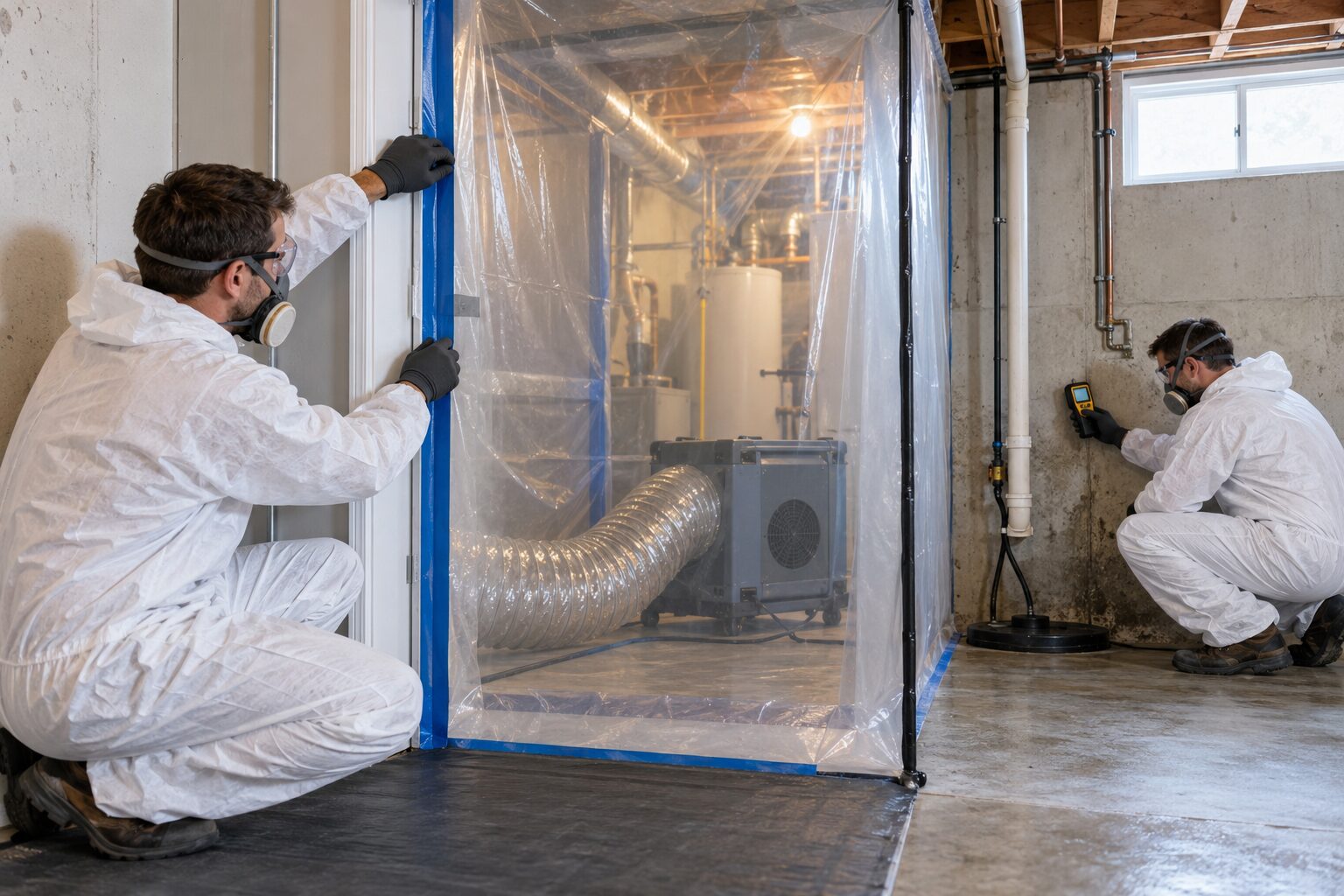
Polyethylene barriers and sealed openings create a defined work zone around affected materials. This physical separation helps limit movement between the remediation area and unaffected parts of the home. Access is controlled so technicians can move materials and equipment through a planned route while keeping the rest of the property as undisturbed as practical.
Negative air and HEPA filtration support control
A negative-air setup is designed to keep airflow moving into the contained zone rather than out toward clean spaces. HEPA-filtered air scrubbers capture fine airborne particles during the work. These controls do not replace careful removal practices, but they support a more controlled environment while technicians handle affected drywall, insulation, flooring, or contents.
Affected materials are removed and surfaces cleaned
Within containment, materials that cannot be adequately cleaned may be removed using methods suited to the condition and material type. Debris is contained for transport, and remaining surfaces are cleaned as the scope requires. Technicians may continue HEPA filtration and detailed cleaning until the work area is ready for evaluation.
Moisture control helps address the cause
Mold growth is connected to excess moisture, so remediation should also address the water source. A roof leak, plumbing problem, foundation seepage, or elevated humidity may require repair or drying before the area can stay stable. When mold follows a leak or flood, coordinated water damage restoration can help dry materials and reduce the chance of the same moisture condition returning.
Verification comes before the area is reopened
After remediation, the work area is reviewed before containment is removed. Post-remediation verification may include a visual assessment and, when appropriate or requested, third-party testing. The right steps depend on the property and the original scope. 1-800 WATER DAMAGE of Kansas City North provides mold assessment, containment, remediation, HEPA filtration, and verification support for homes across the Kansas City Northland, including Liberty and Kearney.
Concerned about mold in your home? Call 816-781-6760 to schedule a mold inspection. Our locally owned and operated team can assess the affected area, explain the appropriate containment plan, and provide mold remediation services throughout the Kansas City Northland.
Need help now?
Learn more about our Mold Inspection & Remediation service, or call 24/7:
Call 816-781-6760