
Water Heater Leak Cleanup: A Guide for Northland Homeowners
Published
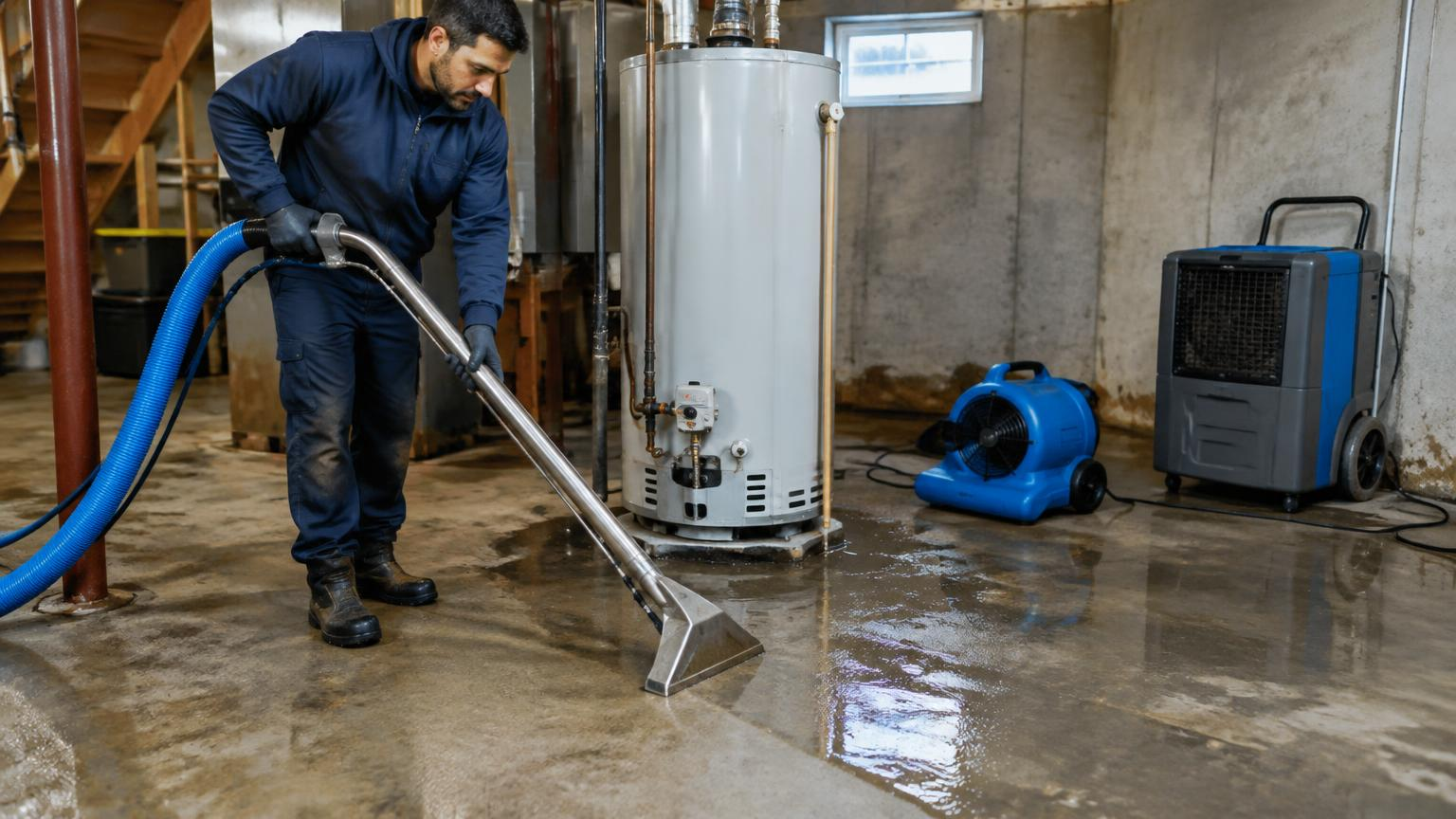
Finding water pooled around your water heater is one of those moments that stops you in your tracks. Maybe it's a slow drip from the drain valve, or maybe the tank let go and the whole utility room is wet. Either way, good water heater leak cleanup is about more than mopping the floor. For homeowners in Liberty, Gladstone, Kearney, Smithville, and across the Kansas City Northland, the goal is to stop the water, protect the home, and make sure nothing stays wet where you can't see it.
First Steps When Your Water Heater Starts Leaking
Start with safety. If water is near outlets, cords, or the electrical panel, stay out of it and wait for help rather than wading in. If you can reach the controls from a dry spot, turn off power to an electric unit at the breaker, or turn a gas unit's control to the off or pilot setting by following the label on the tank. If you smell gas, leave the house and call your gas utility from outside.
Next, stop the water. Most water heaters have a cold water shutoff valve on the line that feeds the top of the tank. Closing it keeps the tank from refilling. If you can't find it or it won't turn, close the main water shutoff for the house. Then take photos and video of the tank, the floor, and anything that got wet before you start moving things around.
Why Water Heater Leak Cleanup Goes Beyond the Puddle
Water heaters usually sit in basements, garages, closets, or utility rooms, and those spaces are full of materials that soak up water. Drywall wicks moisture up from the bottom edge. Carpet pad holds water long after the carpet feels dry on top. Wood framing, bottom plates, and subfloor can stay damp for days. In finished basements, water often slips under walls into the next room before anyone notices.
That's why a professional crew focuses on finding where the water went, not just where it's sitting. Technicians use moisture meters and, where needed, thermal imaging to map the wet area, including spots that look and feel dry. Our water damage restoration process starts with that assessment so the drying plan matches what's actually wet.
Slow Drips Versus Sudden Tank Failures
Not every leak looks the same. A slow drip from a fitting, the relief valve, or the drain valve might soak a small area over weeks. A tank that splits can release its whole contents at once, and if the supply line stays open, it keeps feeding water until someone shuts it off. Both deserve attention.
Slow leaks are sneaky because they give moisture time to settle in. If you notice rust stains, a musty smell, soft drywall, or warped baseboards near your water heater, there may be more going on behind the surface. Our post on signs of hidden mold after a water leak covers what to watch for.
What Professional Water Heater Leak Cleanup Includes
Every job is a little different, but the work usually follows a clear path. Standing water comes out first with extraction equipment. Wet materials that can't be dried in place, like saturated carpet pad or badly swollen drywall, may need to be removed. Then air movers and commercial dehumidifiers go in, placed to a drying plan rather than pointed wherever there's an open outlet.
The crew comes back to log moisture readings until materials reach a documented dry standard. That record matters, because it shows the job was finished based on readings, not on how the floor feels. Once drying is verified, repairs like drywall, flooring, trim, and paint can be coordinated so you aren't hiring a separate contractor to wrap things up.
When a Water Heater Leak Turns Into a Mold or Sewage Problem
If water sat for a while before anyone found it, mold can become part of the picture. In that case, the affected area may need mold remediation with containment and HEPA filtration before materials are removed. You can read more about why containment comes before mold removal and what that process looks like.
Water heaters also tend to sit near floor drains. If that drain backs up while the tank is leaking, or if wastewater mixes with the clean water on the floor, the situation changes. Contaminated water calls for sewage cleanup procedures, including removal of affected porous materials and sanitizing. Our guide on sewage backup and what homeowners should know explains the safety steps.
A Few Words About Insurance
Many homeowners policies treat a sudden water heater failure differently from a slow leak that went on for a long time, and mold or sewage-related damage often has its own limits or exclusions. Coverage varies by policy, so the best move is to call your carrier and ask. Photos, moisture readings, and a written scope from the restoration team can help that conversation, and our team can share documentation with your adjuster. The coverage decision is always up to your carrier.
Keeping Your Next Water Heater From Causing Trouble
A little attention goes a long way. Check around the base of your tank every so often for moisture, rust, or mineral crust. Keep boxes and belongings off the floor near the heater. Know where your water shutoffs are before you need them. If you have a finished basement, our checklist for the first hour after your basement floods is worth reading now, before anything happens. And with Northland winters on the way, it's a good time to review how to prevent frozen pipes this Kansas City winter too.
Frequently Asked Questions About Water Heater Leaks
Can I clean up a water heater leak myself? A small puddle from a minor drip can often be wiped up, as long as the source gets fixed and the surrounding materials stay dry. If water spread into drywall, carpet, or another room, or you can't tell how far it went, a professional assessment helps make sure nothing is left wet.
Should I keep using my water heater after a leak? Not until the source is found and repaired. Keep the supply valve closed and the unit shut off, and talk with a plumber about repair or replacement.
How long does drying take after a water heater leak? It depends on how much water there was, how long it sat, and what got wet. Drying wraps up when moisture readings confirm materials are dry, not on a fixed schedule.
What if the water smells bad? A foul odor may mean the water mixed with drain or sewer water. Keep everyone out of the area and call for help, since that water should be handled as contaminated. Learn what professional sewage cleanup includes after the water is gone.
24/7 Water Heater Leak Cleanup Across the Northland
1-800 WATER DAMAGE of Kansas City North handles water extraction, structural drying, appliance and water heater leak cleanup, and repair coordination for homes throughout the Kansas City Northland. The locally owned and operated team has served the Northland since 2002 and responds in Trimble, Liberty, Smithville, Kearney, Gladstone, Platte City, Parkville, and surrounding communities.
Dealing with a leaking water heater right now? Call 1-800 WATER DAMAGE of Kansas City North at 816-781-6760. A real person answers 24/7 and can walk you through what to shut off while the local team prepares to respond.