
Sump Pump Failure Cleanup: What Northland Homeowners Should Do
Published
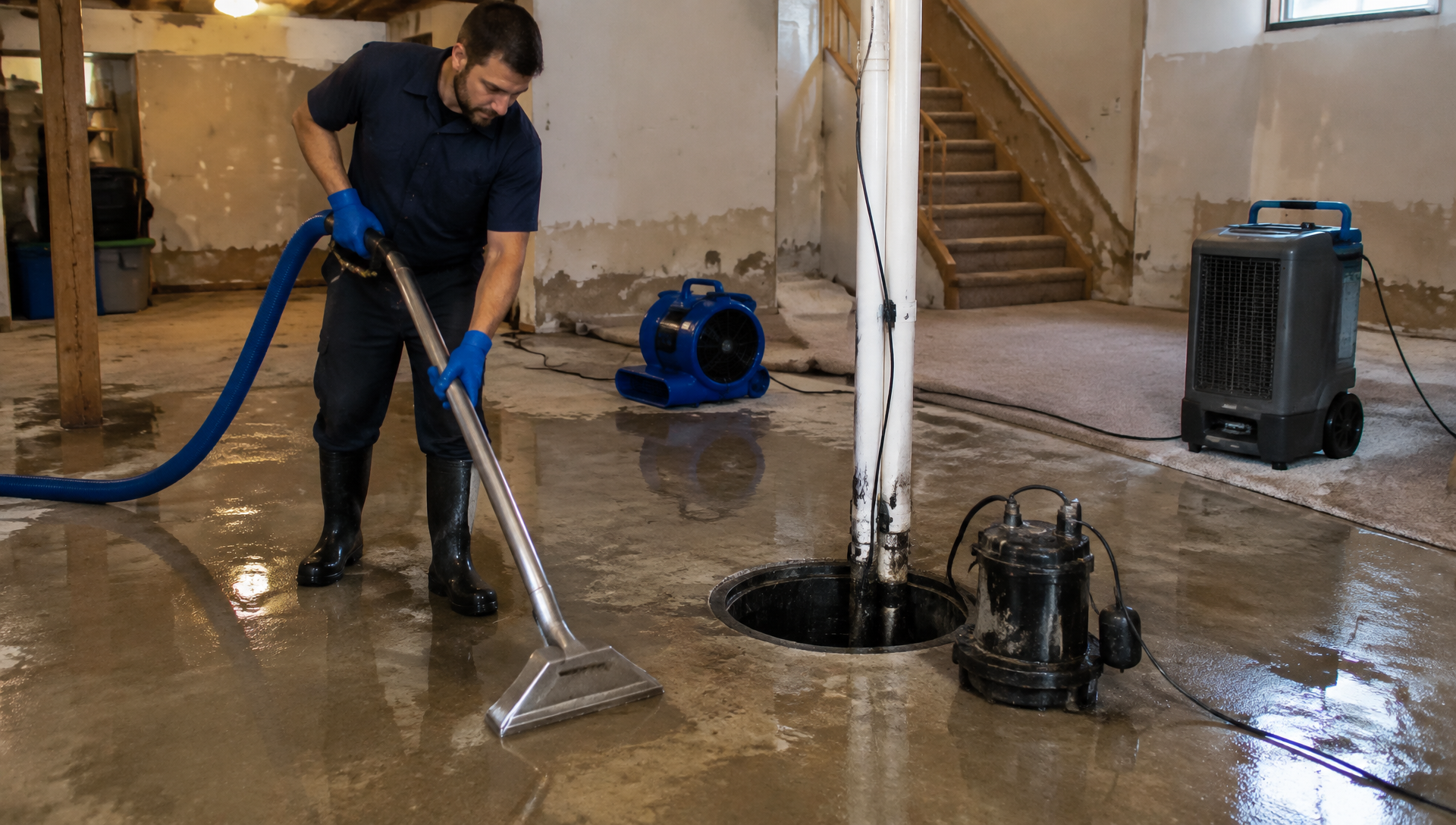
Most of the time, your sump pump is the quietest appliance in the house. You don't think about it until a heavy rain rolls through the Northland, the power flickers, and you head downstairs to find water spreading across the basement floor. Sump pump failure cleanup is about more than pumping out what you can see. For homeowners in Liberty, Gladstone, Kearney, Smithville, Platte City, and across the Kansas City Northland, the goal is to get the water out, find everything that got wet, and dry the space properly so a bad night doesn't turn into a long-term problem.
Why Sump Pumps Fail When You Need Them Most
Sump pumps tend to give out at the worst possible moment, because the moment they're needed most is also when they're working hardest. A few common reasons we see in Northland basements:
A power outage during a storm, which shuts down the pump right as groundwater rises. A stuck or tangled float switch that never tells the pump to turn on. A motor that's simply worn out after years of cycling. A clogged intake or a discharge line that's frozen, blocked, or disconnected outside. Or a pump that just can't keep up when the ground around the foundation is fully saturated.
Whatever the cause, the result is the same. Water that should have been sent outside ends up on your basement floor, and it starts soaking into everything it touches.
What to Do First When Your Sump Pump Fails
Safety comes before anything else. If water is near outlets, extension cords, appliances, or the electrical panel, stay out of it. Only shut off power at the breaker if you can reach it from a completely dry spot. If you can't, wait for help.
Once it's safe, take photos and video of the water, the sump pit, the pump, and anything that got wet before you start moving things around. Then lift what you can off the floor: boxes, rugs, electronics, and small furniture. Don't run a household vacuum on wet floors. If you have a backup pump or the main pump simply needs to be plugged back in after an outage, getting it running again can keep more water from coming in. For a broader checklist, our guide on the first hour after your basement floods walks through each step.
What Professional Sump Pump Failure Cleanup Includes
Every basement is a little different, but the work usually follows a clear path. It starts with an assessment. A technician looks at where the water came from and uses moisture meters, and thermal imaging where it helps, to map how far it actually traveled. Water in a finished basement often slips under walls and into rooms that look dry from the doorway.
Next comes extraction. Standing water is removed with professional equipment so less of it has time to soak into the structure. Materials that can't be dried in place, like saturated carpet pad or badly swollen drywall, may need to be removed.
Then the drying starts. Air movers and commercial dehumidifiers are placed to a drying plan, and the crew returns to log moisture readings until materials reach a documented dry standard. Once drying is verified, repairs like drywall, flooring, trim, and paint can be coordinated. You can see how the full process fits together on our water damage restoration page.
Finished Basements Need Extra Attention
Unfinished basements with bare concrete are usually simpler to dry. Finished basements are a different story. Carpet and pad hold water long after the surface feels dry. Drywall wicks moisture upward from the bottom edge. Bottom plates, baseboards, and built-in cabinets can stay damp behind the finish where nobody can see them.
That's why a quick cleanup with towels and box fans often leaves moisture behind. It's the same reason we recommend a professional look after a water heater leak cleanup in a finished space. The water you can see is usually only part of the story.
When Sump Pump Water Becomes a Mold or Sewage Concern
If water sat for a while before anyone noticed, maybe during a weekend away or in a storage room nobody visits often, mold can become part of the picture. Musty odors, staining, and warped trim are worth paying attention to. Our post on signs of hidden mold after a water leak covers what to look for. When growth is present, mold remediation uses containment and HEPA filtration before affected materials come out, and you can read why containment comes before mold removal.
Sump pits often sit near floor drains. If a drain backed up at the same time, or the water has a foul smell, it should be treated as contaminated. That calls for sewage cleanup procedures, including removal of affected porous materials and sanitizing. Our guides on sewage backup and what homeowners should know and what professional sewage cleanup includes explain the safety steps and the process.
A Few Words About Insurance
Water from a failed sump pump is often handled differently from a burst pipe or a sudden appliance failure. Many policies need a separate endorsement for sump or water backup, and groundwater, mold, and sewage-related damage often have their own limits or exclusions. Coverage varies by policy, so the best move is to call your carrier and ask. Photos, moisture readings, and a written scope from the restoration team can help that conversation, and our team can share documentation with your adjuster. The coverage decision is always up to your carrier.
Helping Your Sump Pump Hold Up Through the Next Storm
A little attention goes a long way. Every so often, pour a bucket of water into the pit and make sure the pump kicks on and the water drains away. Keep the pit clear of debris. Walk outside and check that the discharge line is attached and pointed away from the foundation. Ask a plumber about a battery backup or a secondary pump if your basement has flooded before. And as Northland winters set in, make sure the discharge line can drain freely, and review how to prevent frozen pipes this Kansas City winter while you're at it.
Frequently Asked Questions About Sump Pump Failures
Can I clean up after a sump pump failure myself? A small amount of water on bare concrete can often be cleaned up, as long as the pump is fixed and nothing else got wet. If water reached carpet, drywall, or another room, or you can't tell how far it went, a professional assessment helps make sure nothing is left damp.
Should I replace my sump pump before cleanup starts? Getting a working pump back in place is important, especially if more rain is on the way. Talk with a plumber about repair or replacement while the drying work moves forward.
How long does drying take after a sump pump failure? It depends on how much water there was, how long it sat, and what materials got wet. Drying wraps up when moisture readings confirm materials are dry, not on a fixed schedule.
24/7 Sump Pump Failure Cleanup Across the Northland
1-800 WATER DAMAGE of Kansas City North handles water extraction, basement water removal, structural drying, and repair coordination for homes throughout the Kansas City Northland. The locally owned and operated team has served the Northland since 2002 and responds in Trimble, Liberty, Smithville, Kearney, Gladstone, Platte City, Parkville, and surrounding communities.
Dealing with a failed sump pump and a wet basement right now? Call 1-800 WATER DAMAGE of Kansas City North at 816-781-6760. A real person answers 24/7 and can walk you through what to do while the local team prepares to respond.