
Burst Pipe Cleanup: What Northland Homeowners Need to Know
Published
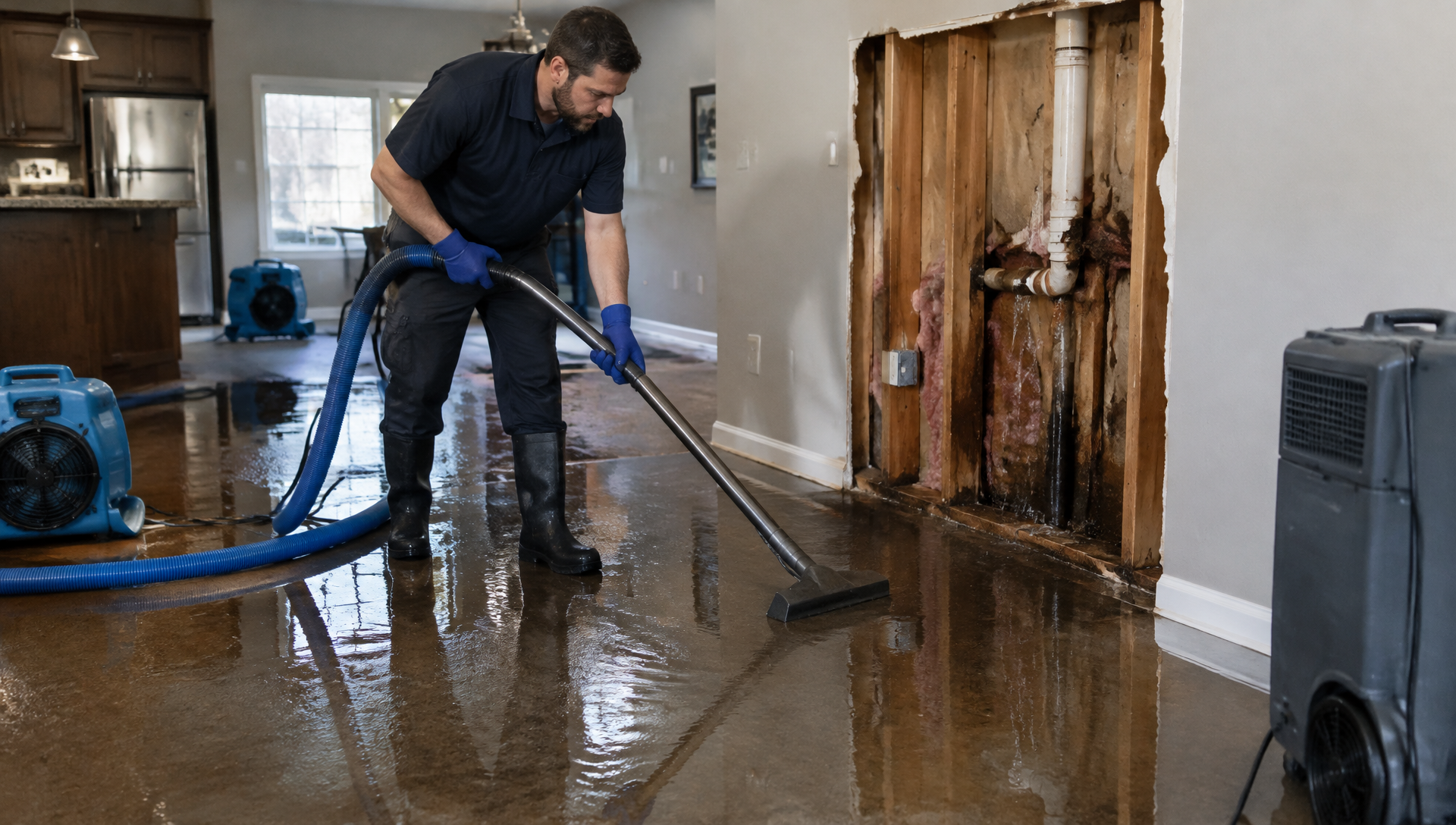
A burst pipe rarely gives you a warning. One minute everything is normal, and the next you hear water running where it shouldn't be or spot a stain spreading across the ceiling. Burst pipe cleanup is about more than shutting off the water and mopping up the floor. For homeowners in Liberty, Gladstone, Kearney, Smithville, Platte City, and across the Kansas City Northland, the goal is to stop the water, find everywhere it traveled, and dry the home properly so one bad day doesn't turn into months of trouble.
Why Pipes Burst in Northland Homes
Cold weather gets most of the blame, and for good reason. When water freezes inside a pipe, it expands and builds pressure until something gives. Pipes along exterior walls, in crawl spaces, in unheated garages, and in attics tend to be the most vulnerable when a hard freeze settles over the Northland.
Freezing isn't the only cause, though. Older fittings can corrode, supply lines to sinks, toilets, and appliances can wear out, and a pipe that gets bumped or shifted during a project can start leaking later. Whatever the cause, a burst pipe sends clean water into places it was never meant to go, and it keeps flowing until someone shuts it off. If winter is on your mind, our guide on how to prevent frozen pipes this Kansas City winter is a good place to start.
What to Do in the First Few Minutes After a Pipe Bursts
Start by shutting off the water. Your main shutoff valve is usually near the water meter or where the line enters the house, often in the basement. If the break is on a single fixture line, the small valve under the sink or behind the toilet may stop it. Knowing where these valves are before you need them makes a stressful moment a lot easier.
Next, think about safety. If water is near outlets, cords, appliances, or the electrical panel, stay out of it. Only shut off power at the breaker if you can reach it from a completely dry spot. If a ceiling is sagging with water above it, keep everyone out from underneath.
Once it's safe, take photos and video of the broken pipe, the water, and anything that got wet before you start moving things. Then lift what you can off the floor, like rugs, boxes, and electronics. Don't run a household vacuum on wet floors. If the break happened in a basement, our checklist for the first hour after your basement floods walks through each step.
What Professional Burst Pipe Cleanup Includes
Every home is different, but the work usually follows a clear path. It starts with an assessment. A technician looks at where the water came from and uses moisture meters, and thermal imaging where it helps, to map how far it actually went. Water from a burst pipe often runs inside wall cavities, along floor joists, and under flooring, so the wet area is usually bigger than what you can see from the doorway.
Next comes extraction. Standing water is removed with professional equipment so less of it soaks into the structure. Materials that can't be dried in place, like saturated carpet pad or badly swollen drywall, may need to be removed.
Then the drying begins. Air movers and commercial dehumidifiers are placed to a drying plan, and the crew returns to log moisture readings until materials reach a documented dry standard. Once drying is verified, repairs like drywall, flooring, trim, and paint can be coordinated. You can see how the whole process fits together on our water damage restoration page.
Hidden Water Is the Real Problem
Here's what catches a lot of homeowners off guard. A pipe that breaks inside an upstairs wall or ceiling doesn't just leak in one spot. Gravity pulls the water down through insulation, drywall, and framing, and it can show up a floor below or in a room that looks completely fine at first glance.
That's why a quick cleanup with towels and box fans often leaves moisture behind. Drywall wicks water upward from the bottom edge. Carpet pad holds water long after the surface feels dry. Bottom plates and subfloor can stay damp behind finished surfaces where nobody can see them. It's the same reason we recommend a professional look after a water heater leak cleanup or a sump pump failure cleanup in a finished space.
When a Burst Pipe Leads to Mold or Contamination
If a pipe leaked slowly for a while, or the break happened while you were away, mold can become part of the picture. Musty odors, staining, peeling paint, and warped trim are all worth paying attention to. Our post on signs of hidden mold after a water leak covers what to look for. When growth is present, mold remediation uses containment and HEPA filtration before affected materials come out, and you can read why containment comes before mold removal.
Most burst pipes carry clean supply water, but not always. If a drain line broke, or the water mixed with a floor drain backup or has a foul smell, it should be treated as contaminated. That calls for sewage cleanup procedures, including removal of affected porous materials and sanitizing. Our guides on sewage backup and what homeowners should know and what professional sewage cleanup includes explain the safety steps.
A Few Words About Insurance
Many homeowners policies treat a sudden pipe break differently from a slow leak that went on for a long time, and mold or contaminated water often has its own limits or exclusions. Coverage varies by policy, so the best move is to call your carrier and ask. Photos, moisture readings, and a written scope from the restoration team can help that conversation, and our team can share documentation with your adjuster. The coverage decision is always up to your carrier.
Frequently Asked Questions About Burst Pipe Cleanup
Can I handle burst pipe cleanup myself? A small leak on a hard floor can often be wiped up once the pipe is repaired. If water reached drywall, carpet, a ceiling, or another room, or you can't tell how far it went, a professional assessment helps make sure nothing is left wet.
Should I call a plumber or a restoration company first? Usually both. A plumber repairs the pipe, and a restoration team handles the water that already escaped. Shutting off the water comes first either way.
How long does drying take after a burst pipe? It depends on how much water there was, how long it ran, and what materials got wet. Drying wraps up when moisture readings confirm materials are dry, not on a fixed schedule.
24/7 Burst Pipe Cleanup Across the Northland
1-800 WATER DAMAGE of Kansas City North handles water extraction, structural drying, and repair coordination for homes throughout the Kansas City Northland. The locally owned and operated team has served the Northland since 2002 and responds in Trimble, Liberty, Smithville, Kearney, Gladstone, Platte City, Parkville, and surrounding communities.
Dealing with a burst pipe right now? Call 1-800 WATER DAMAGE of Kansas City North at 816-781-6760. A real person answers 24/7 and can walk you through what to shut off while the local team prepares to respond.